


Matériaux réutilisés et quantités
Building with Reclaimed Steel
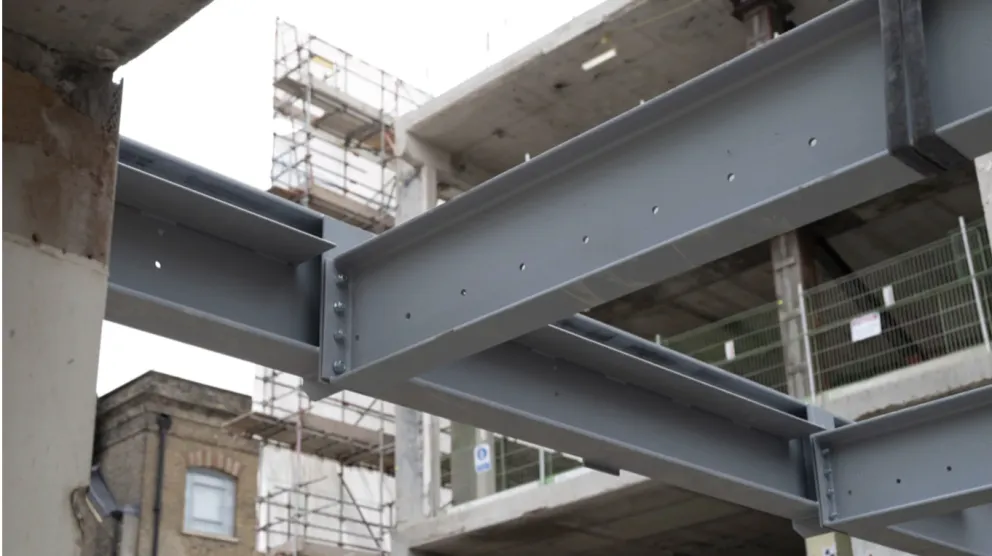
The first step was to do an audit of the structure that is to be deconstructed and do a sampling and testing of the steelwork on wether it is fitting for the design. The steel members in this case were then exposed and inspected on site. Following this the tower crane lifts the steel members down. The steelwork is then sent to be tested and refabricated as deemed fit and then incorporated into the 318 Oxford st. extension while the fabrication losses are erected at the Tower Bridge Court development.
Reclaimed Quantities Summary:
20 tonnes of 1930s steel beams were salvaged and reused.
100 tonnes of steel was saved through the reuse initiative.
This reuse is expected to save 48 tonnes of carbon dioxide emissions.
Additionally, some of the 8th-floor columns were repurposed from other parts of the building. The remaining steel members that couldn't be reused onsite were made available for reuse by third parties and were incorporated into the Tower Bridge Court development.
Le projet
Urban mining motivates the reuse of materials from existing urban environments and structures rather than depending on the more conventional mining operations. This allows the urban environment to stand as an ideal source of materials. This creates an approach where the “man made mine” comes into play, where materials derived from earth, and brought into developments, become the source of a reclaimed process which supports the ideals of the circular economy.
The circular economy approach is evident in the refurbishment of the 318 Oxford Street building. The idea was to reuse much of the existing steel members throughout the project from the former House of Fraser building. More specifically, 20 tonnes of 1930s steel beams were salvaged and reused. Following that, at least 100 tonnes of steel is said to be saved from the refurbishment. Through this reuse initiative, it is said that about 48 tonnes of Carbon Dioxide will be saved in regards to using new steelwork. The steelwork was extracted, and prefabricated to then be incorporated into the new development. This allows the building itself to be perceived as the source of material.
The structural works of the building have been significantly reduced to the minimum required to give the building a sustainable use. Although it was unavoidable to demolish a small portion of the 1930s steel work. This was also a vital part of the projects consideration as the steelwork that was removed had to be used in a positive way to reduce the carbon footprint. The first way was to reuse the columns within the project, so many of the new 8th floor columns are repurposed from other parts of the building. The remaining steel members that were not able to be repurposed were publicized for availability to be reused by third parties, and have now been incorporated into the new Tower Bridge Court development.
- Type
- Integration
- Type de marché
- privé
- Year
- 2024
- Copyrights
- construction management.co.uk